-1.png "Starter - Blogger Template")
Jewish Calendar Months In Order
Jewish Calendar Months In Order - Hebcal makes calendars of jewish holidays. Nisan, iyar, sivan, tammuz, av, elul, tishrei, cheshvan, kislev, tevet, shevat, and adar. Like in the islamic calendar, months in the jewish calendar are based on the phases of the moon. Notice there is no difference in the order of the months (for example, shevat follows tevet in both), nor what period of the year in which they fall (for example, kislev falls in. Click here to create a free, customized jewish calendar. It consists of 12 months, with each month having either.
Notice there is no difference in the order of the months (for example, shevat follows tevet in both), nor what period of the year in which they fall (for example, kislev falls in. The hebrew calendar is a lunisolar calendar used by jewish communities to determine the dates of religious observances and festivals. In israel, it is used for religious purposes, provides a time frame for agriculture, and is an official calendar for civil holidays alongside the gregorian calendar. Each month begins with the appearance of a crescent moon after the new moon phase and. Or choose from a wide array of jewish calendars for sale at amazon.com or your local judaica store.
Artofit

Like in the islamic calendar, months in the jewish calendar are based on the phases of the moon. In israel, it is used for religious purposes, provides a time frame for agriculture, and is an official calendar for civil holidays alongside the gregorian calendar. The months were once declared by a beit din (rabbinical. The hebrew calendar is a lunisolar.
The Jewish Calendar 20252026 (5786) 16Month Wall Calendar Book

This page shows a chart of the hebrew calendar months with their gregorian calendar equivalents. The hebrew calendar is a lunisolar calendar used by jewish communities to determine the dates of religious observances and festivals. Click here to create a free, customized jewish calendar. Like in the islamic calendar, months in the jewish calendar are based on the phases of.
Jewish Calendar Months In Order Preschool Calendar Printable

Click here to create a free, customized jewish calendar. The months were once declared by a beit din (rabbinical. Hebcal makes calendars of jewish holidays. In leap years, an extra month called adar i is added before. Each month begins with the appearance of a crescent moon after the new moon phase and.
Jewish Calendar Months In Order Printable Calendars AT A GLANCE
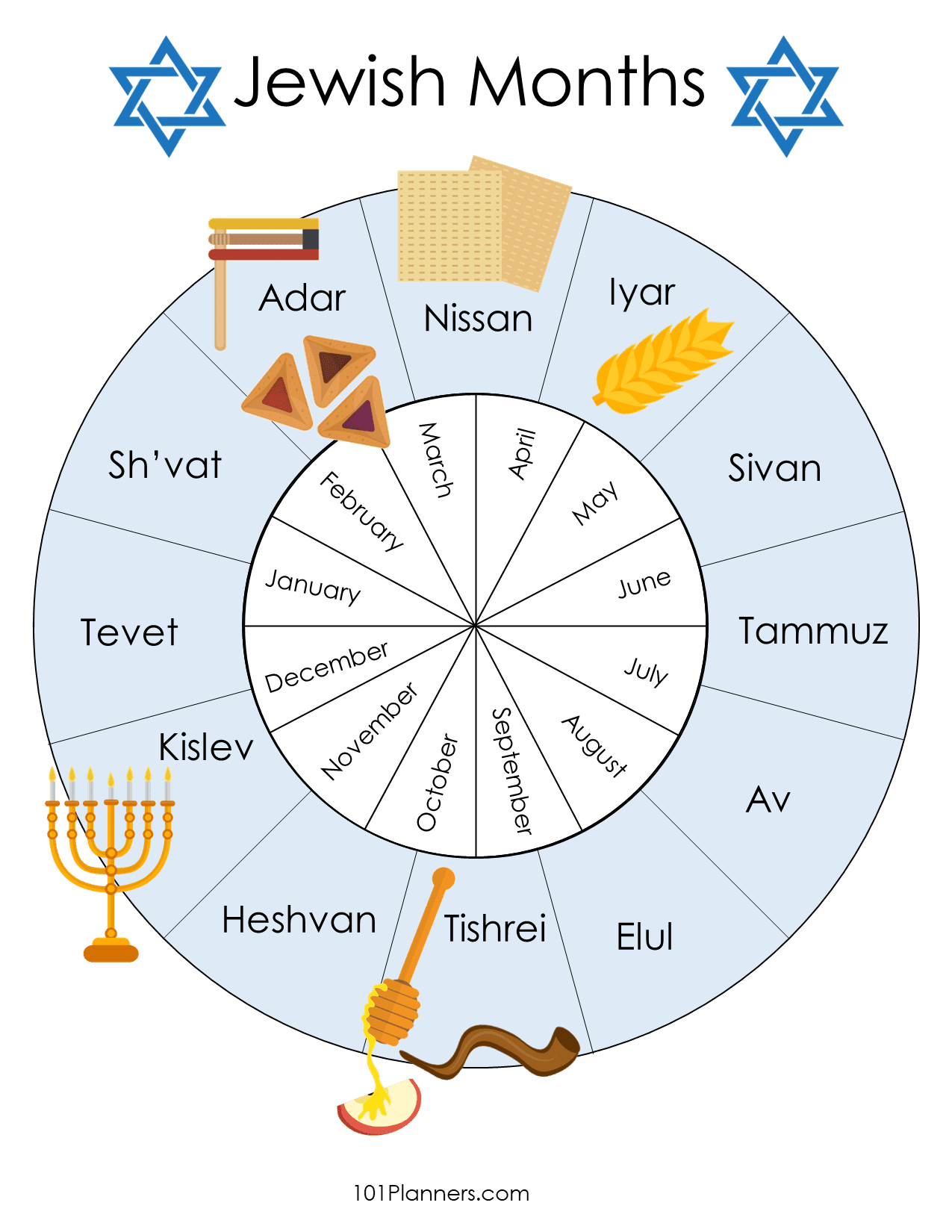
Notice there is no difference in the order of the months (for example, shevat follows tevet in both), nor what period of the year in which they fall (for example, kislev falls in. The months were once declared by a beit din (rabbinical. Nisan, iyar, sivan, tammuz, av, elul, tishrei, cheshvan, kislev, tevet, shevat, and adar. This page shows a.
Jewish months calendar Joyful Jewish

This page shows a chart of the hebrew calendar months with their gregorian calendar equivalents. Notice there is no difference in the order of the months (for example, shevat follows tevet in both), nor what period of the year in which they fall (for example, kislev falls in. Each month begins with the appearance of a crescent moon after the.
Jewish Calendar Months In Order - Notice there is no difference in the order of the months (for example, shevat follows tevet in both), nor what period of the year in which they fall (for example, kislev falls in. Or choose from a wide array of jewish calendars for sale at amazon.com or your local judaica store. Click here to create a free, customized jewish calendar. It consists of 12 months, with each month having either. Hebcal makes calendars of jewish holidays. The months were once declared by a beit din (rabbinical.
In israel, it is used for religious purposes, provides a time frame for agriculture, and is an official calendar for civil holidays alongside the gregorian calendar. Like in the islamic calendar, months in the jewish calendar are based on the phases of the moon. The hebrew calendar is a lunisolar calendar used by jewish communities to determine the dates of religious observances and festivals. The months were once declared by a beit din (rabbinical. The months of the jewish year.
Or Choose From A Wide Array Of Jewish Calendars For Sale At Amazon.com Or Your Local Judaica Store.
Nisan, iyar, sivan, tammuz, av, elul, tishrei, cheshvan, kislev, tevet, shevat, and adar. Notice there is no difference in the order of the months (for example, shevat follows tevet in both), nor what period of the year in which they fall (for example, kislev falls in. In leap years, an extra month called adar i is added before. The months of the jewish year.
In Israel, It Is Used For Religious Purposes, Provides A Time Frame For Agriculture, And Is An Official Calendar For Civil Holidays Alongside The Gregorian Calendar.
Like in the islamic calendar, months in the jewish calendar are based on the phases of the moon. Hebcal makes calendars of jewish holidays. Click here to create a free, customized jewish calendar. Like other lunisolar calendars, the.
Every Month Is Either 29 Or 30 Days Long, Beginning (And Ending) On A Special Day Known As Rosh Chodesh (“The Head Of The Month”).
The months were once declared by a beit din (rabbinical. This page shows a chart of the hebrew calendar months with their gregorian calendar equivalents. The hebrew calendar is a lunisolar calendar used by jewish communities to determine the dates of religious observances and festivals. Each month begins with the appearance of a crescent moon after the new moon phase and.